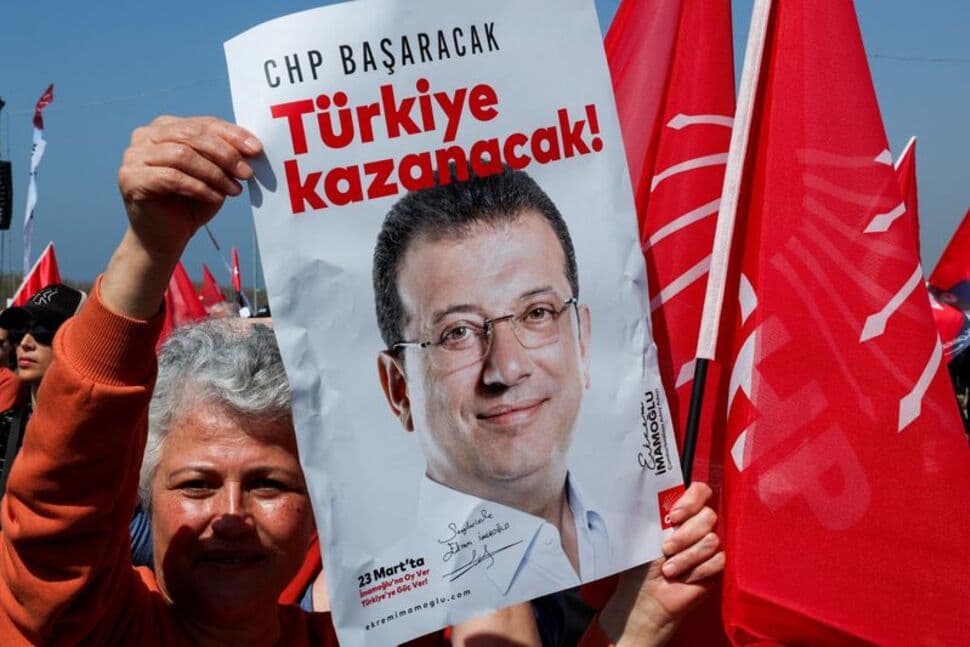
Turkey's escalating assault on democratic opposition has reached a new crescendo with prosecutors launching an investigation into the head of the country's main opposition party, marking the latest chapter in what critics describe as President Recep Tayyip Erdogan's most comprehensive crackdown on political dissent in over two decades of rule. The investigation into Republican People's Party (CHP) leader Ozgur Ozel on charges of threatening and insulting Istanbul's chief prosecutor represents not merely another legal proceeding, but a fundamental challenge to the remnants of pluralistic democracy in a nation that once served as a beacon of secular governance in the Islamic world.The current offensive centers on Istanbul Mayor Ekrem Imamoglu, arguably the most potent political threat to Erdogan's continued dominance. Imamoglu's imprisonment in March on corruption charges—which he vehemently denies—has triggered a cascade of arrests, investigations, and restrictions that reveal the systematic nature of efforts to neutralize opposition forces ahead of crucial electoral cycles. The mayor's arrest sparked immediate mass protests across Istanbul and other major cities, creating economic uncertainty and drawing international condemnation of what observers characterize as the instrumentalization of Turkey's judicial system for political ends.
The Architecture of Democratic Erosion
The investigation into Ozel emerged from comments he made at a Wednesday rally in Istanbul, where he criticized the targeting of opposition figures and the apparent coordination between prosecutors and government officials. His statements, deemed by prosecutors as threatening and insulting to judicial authorities, illustrate how broadly Turkish law enforcement interprets dissent and criticism in the current political climate.This legal offensive represents far more than isolated prosecutorial decisions—it reflects a sophisticated strategy to systematically dismantle opposition infrastructure through coordinated legal, administrative, and media pressure. Since Imamoglu's arrest, authorities have detained dozens of CHP members, municipal officials from Istanbul and other CHP-controlled cities, and civil society activists, creating a climate of fear that extends well beyond the immediate targets.The blocking of Imamoglu's social media accounts adds a digital dimension to the crackdown, demonstrating how traditional authoritarian tactics have evolved to encompass online spaces where opposition figures maintain direct communication with supporters. This digital censorship occurs against the backdrop of Turkey's increasingly restrictive social media laws, which grant authorities broad powers to block content and demand data from platforms.
Historical Context and Democratic Backsliding
Turkey's current political crisis must be understood within the broader context of democratic erosion that has accelerated dramatically since the failed coup attempt in July 2016. That pivotal moment provided Erdogan with both the justification and opportunity to implement sweeping purges across Turkish institutions, from the military and judiciary to academia and civil service. An estimated 150,000 people were dismissed from their positions, while tens of thousands were imprisoned on charges ranging from terrorism to undermining state security.The Republican People's Party, founded by modern Turkey's founder Mustafa Kemal Ataturk, represents the country's oldest political institution and the primary guardian of secular, democratic principles. The party's systematic targeting represents an assault on the foundational values of the Turkish Republic itself, marking a dramatic departure from the pluralistic traditions that once distinguished Turkey from many of its regional neighbors.Erdogan's Justice and Development Party (AKP) has ruled Turkey since 2002, initially earning international praise for economic modernization and democratic reforms required for European Union membership negotiations. However, the relationship between the AKP leadership and democratic institutions has deteriorated progressively, particularly following the 2013 Gezi Park protests, which demonstrated the government's intolerance for civil dissent and marked a turning point toward increasingly authoritarian governance.
The Istanbul Prize
Istanbul's political significance extends far beyond its role as Turkey's largest city and economic center. Control of the metropolis represents a powerful platform for national political ambitions and access to substantial municipal resources that can be leveraged for broader political purposes. Imamoglu's victory in the 2019 mayoral election, which he won twice after authorities controversially annulled his initial victory, dealt a significant blow to Erdogan's political prestige and demonstrated the continued viability of opposition politics despite increasingly difficult circumstances.The mayor's popularity stems partly from his pragmatic approach to urban governance and his ability to appeal to voters across traditional political divides. Public opinion polling consistently shows him leading Erdogan in hypothetical presidential matchups, making him the most credible opposition challenger to emerge in years. This electoral threat provides crucial context for understanding why authorities have pursued such aggressive legal action against him and his political network.The corruption charges against Imamoglu relate to alleged irregularities in municipal contracts and hiring practices—accusations that opposition supporters dismiss as fabricated pretexts for political persecution. The timing of these charges, emerging just as Imamoglu was gaining national prominence and considering a potential presidential campaign, reinforces perceptions that the judicial system has become a tool for eliminating political competition.
International Dimensions and Economic Impact
Turkey's democratic regression has attracted increasing international attention and criticism, particularly from European allies who have watched with alarm as a NATO member and EU candidate country has moved steadily away from democratic norms. The European Parliament has passed multiple resolutions condemning Turkey's human rights record and calling for the release of political prisoners, while individual European governments have imposed targeted sanctions on Turkish officials.The United States has similarly expressed concern about democratic backsliding in Turkey, though American responses have been complicated by Turkey's strategic importance in regional security arrangements and its role in NATO operations. The Biden administration has attempted to balance criticism of authoritarian tendencies with efforts to maintain cooperative relationships on issues ranging from regional conflicts to migration management.Economic consequences of political instability and democratic erosion have become increasingly apparent in recent years. International investors have grown wary of Turkey's unpredictable political and legal environment, contributing to currency volatility and capital flight. The Turkish lira has experienced dramatic devaluations, while inflation has reached levels that impose severe hardship on ordinary citizens and threaten social stability.
Judicial Independence Under Siege
The investigation into Ozel and the broader crackdown on opposition figures raise fundamental questions about the independence and integrity of Turkey's judicial system. Critics argue that prosecutors and judges increasingly function as extensions of executive authority rather than independent arbiters of law, pointing to patterns in high-profile cases that consistently favor government interests while targeting opposition figures and civil society activists.The systematic nature of these prosecutions suggests coordination at high levels of government, with prosecutors receiving guidance or pressure to pursue cases against political opponents. This dynamic represents a fundamental perversion of legal institutions that were designed to protect citizens from arbitrary government action and ensure equal treatment under law.Professional associations of lawyers and judges have attempted to maintain independence and resist political pressure, but their capacity to do so has been severely compromised by post-coup purges that removed thousands of legal professionals and created a climate of fear within the judicial system. Many remaining judges and prosecutors understand that their careers depend on demonstrating loyalty to the current political leadership rather than upholding abstract principles of justice and rule of law.
Looking Ahead: Democratic Future in Question
The intensification of opposition crackdowns occurs against the backdrop of Turkey's complex electoral calendar, with presidential and parliamentary elections scheduled for 2028 unless called earlier. The systematic weakening of opposition parties and leaders through legal harassment represents a strategy to ensure electoral dominance through the manipulation of democratic processes rather than outright suspension of elections.However, this approach carries significant risks for long-term political stability. By narrowing space for legitimate political competition and dissent, authorities may inadvertently encourage more radical forms of opposition while alienating moderate citizens who might otherwise support government policies. The mass protests following Imamoglu's arrest demonstrated that significant segments of Turkish society remain committed to democratic principles and willing to mobilize in their defense.International pressure and economic consequences may eventually force recalculations of current strategies, particularly if democratic allies impose more serious costs for continued authoritarian drift. The outcome of this political struggle will determine not only Turkey's domestic governance but also its relationships with democratic partners and its role in regional security arrangements.For now, the investigation into Ozgur Ozel represents another step in the systematic dismantling of Turkish democracy, raising profound questions about whether the country can find its way back to the pluralistic traditions that once defined its political identity. The answer will shape not only Turkey's future but also serve as a crucial test case for democracy's resilience in an era of global authoritarian resurgence.