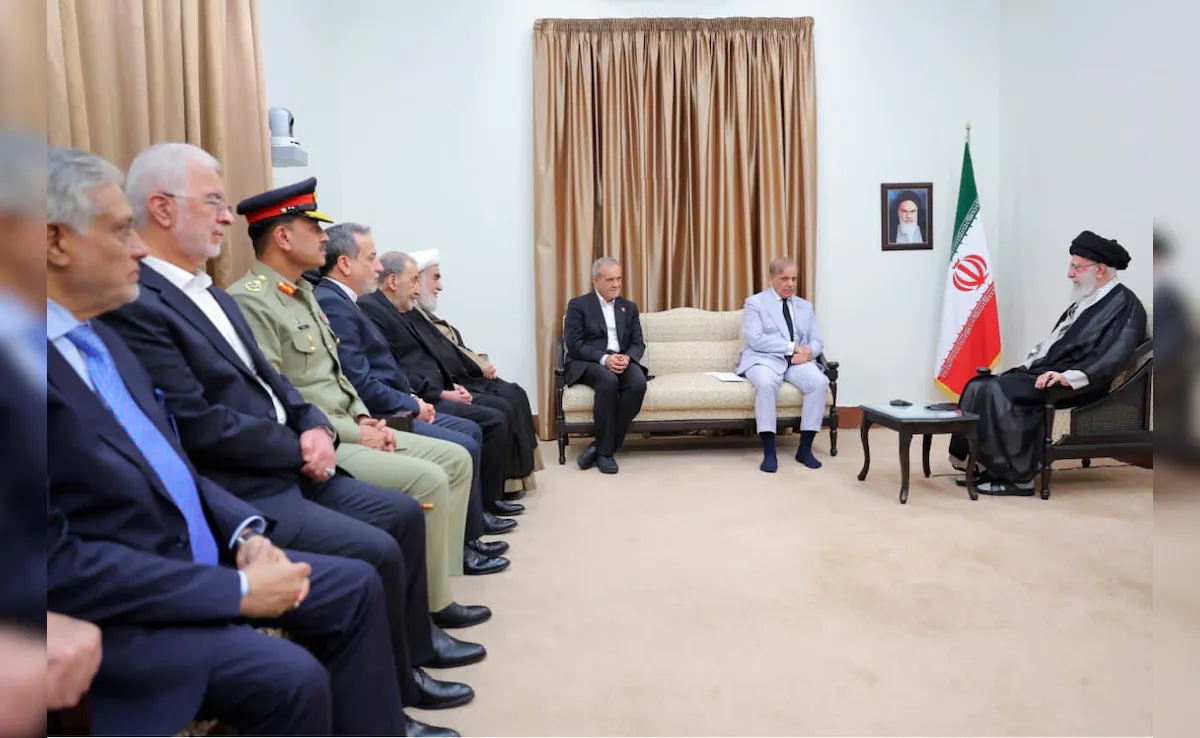
In a significant diplomatic development, Pakistan Prime Minister Shehbaz Sharif met Iran’s Supreme Leader Ayatollah Seyyed Ali Khamenei in Tehran, marking a thaw in relations between the two neighbors after a year of heightened tensions marked by reciprocal airstrikes. The meeting focused on pressing regional issues, including Pakistan’s ongoing conflict with India, but the spotlight remained firmly on the humanitarian crisis in Gaza — a key catalyst drawing Iran and Pakistan closer.
Shared Concerns over Gaza
The meeting took place against the backdrop of the devastating aftermath of Israel’s counteroffensive following the Hamas attacks in October 2023. Ayatollah Khamenei praised Pakistan for resisting Western pressure to normalize relations with Israel, calling it a “principled stance” and condemning what he described as a “blatant betrayal of the Palestinian cause” by other Islamic nations. Khamenei underscored the Palestine issue as the “foremost concern of the Islamic world” and expressed solidarity with Pakistan’s commitment to the Palestinian people.
Prime Minister Sharif echoed these sentiments, emphasizing Pakistan’s unwavering support for the Palestinian cause. “It is high time the international community leverages its influence to bring about a lasting ceasefire in Palestine,” Sharif said, reaffirming Pakistan’s alignment with Iran in promoting peace and prosperity in the region.
Pakistan’s Kashmir Push and Iran’s Diplomatic Balance
During his talks, Sharif raised Pakistan’s concerns about India’s recent airstrikes on Pakistan and Pakistan-Occupied Kashmir, retaliatory measures following the Pahalgam terror attack that claimed 26 innocent lives. He commended Iran’s “positive role” during this tense period.
However, Ayatollah Khamenei maintained a diplomatically neutral stance on the India-Pakistan dispute, expressing hope for peaceful resolution. “We are delighted with the end of conflicts between Pakistan and India and hope that their differences will be resolved,” he said on the social media platform X.
At a joint press conference, Iranian President Masoud Pezeshkian reiterated Iran’s support for dialogue and a durable ceasefire between the two nuclear neighbors. Meanwhile, Sharif offered India peace talks to resolve longstanding disputes on Kashmir, water sharing, trade, and counter-terrorism. “We want peace and will work for peace through talks, on the table, to resolve our outstanding issues,” Sharif said, emphasizing sincerity in Pakistan’s peace overtures.
Easing Iran-Pakistan Tensions
The high-profile meeting in Tehran comes nearly a year after Iran and Pakistan exchanged airstrikes targeting militant groups in their border regions—an episode that significantly strained bilateral ties. Iran’s 2024 airstrikes targeted the Sunni militant group Jaish al-Adl in Pakistan’s Balochistan province, while Pakistan responded with strikes against the Baloch Liberation Front in Iran.
The U.S. Defense Intelligence Agency recently noted both countries’ efforts to de-escalate tensions through high-level engagements, including this meeting. Ayatollah Khamenei reaffirmed the “warm and brotherly” nature of Iran-Pakistan relations, citing Pakistan’s support during the Iran-Iraq war as a historic example of their strong ties.
India’s Diplomatic Maneuvers with Iran
While Pakistan sought closer ties with Iran amid regional turbulence, India has also maintained active diplomatic engagement with Tehran. On May 9, Indian External Affairs Minister Dr. S. Jaishankar and Iranian Foreign Minister Abbas Araghchi co-chaired the 20th India-Iran Joint Commission Meeting, condemning terrorism and pledging enhanced regional cooperation.
Iran had earlier offered to mediate between India and Pakistan, underscoring its interest in regional stability. However, New Delhi has consistently asserted the bilateral nature of its conflict with Pakistan, emphasizing the return of Pakistan-occupied Kashmir and cessation of terrorism as preconditions for peace.
Geopolitical Implications
The Iran-Pakistan rapprochement, primarily driven by shared concern over Gaza, introduces a new dynamic in South Asian geopolitics. India’s neutral stance on the Gaza conflict—supporting a two-state solution and calling for humanitarian aid—allows it to navigate its complex relations with both Iran and Pakistan carefully.
As Tehran, Islamabad, and New Delhi recalibrate their regional strategies, the evolving Iran-Pakistan dialogue signals a potential easing of old rivalries but also highlights the enduring complexity of conflicts in South Asia and the broader Middle East.