India is set to embark on one of the world's largest administrative exercises as the government finally announces plans to conduct its long-delayed national census, marking the first comprehensive population count in over a decade and introducing politically sensitive caste data collection for the first time since the country gained independence in 1947. The Home Ministry's announcement on Wednesday evening revealed that the mammoth two-phase census will conclude by March 1, 2027, with special provisions for snow-bound Himalayan regions including Uttarakhand, Himachal Pradesh, Ladakh, and Jammu and Kashmir, where counting will reference October 1, 2026. The decision to finally move forward with the census ends years of uncertainty that have left policymakers operating with increasingly outdated demographic data in the world's most populous nation. A Decade-Plus Gap in Critical Data The scale of change since India's last census in 2011 cannot be overstated. That count recorded 1.21 billion people, but current United Nations estimates place India's population well above 1.4 billion, officially making it the world's most populous country, surpassing China. This dramatic growth has occurred entirely in a statistical void, as the country has lacked official population data for planning welfare schemes, allocating federal funds, drawing electoral boundaries, and making crucial policy decisions. Originally scheduled for 2021 to maintain the traditional decennial cycle, the census faced initial delays due to the COVID-19 pandemic—a justification that seemed reasonable as the world grappled with unprecedented health challenges. However, as life returned to normal and other countries resumed large-scale administrative operations, India's continued postponement of the census raised questions about the government's true motivations for the delay. Critics have pointed to the politically sensitive timing, suggesting that Prime Minister Narendra Modi's government may have strategically delayed the exercise to avoid potential complications during crucial election cycles. The census data directly impacts parliamentary seat allocation and state representation, making its timing a matter of significant political consequence. The Caste Controversy Perhaps the most explosive aspect of the upcoming census is the government's decision to collect comprehensive caste data from all citizens—a move that breaks with decades of post-independence policy and promises to reshape India's complex social and political landscape. The last time caste was officially counted as part of a national census was in 1931 during British colonial rule, making this inclusion a historically significant departure from established practice. India's caste system, an ancient hierarchy based on occupation and social status, remains one of the most sensitive and politically charged aspects of Indian society. While the Constitution prohibits caste-based discrimination, the reality is that caste continues to play a crucial role in social interactions, marriage decisions, political affiliations, and economic opportunities across the country. Since independence, India's census has only counted members of Scheduled Castes (Dalits) and Scheduled Tribes (Adivasis)—historically marginalized groups that receive specific constitutional protections and affirmative action benefits. However, the upcoming census will expand this data collection to include Other Backward Classes (OBCs), intermediate caste groups that currently receive 27% reservation in government jobs and educational institutions under a policy that caps total quotas at 50%. Political Ramifications and Social Tensions The decision to collect comprehensive caste data carries profound political implications that extend far beyond statistical record-keeping. Armed with detailed demographic information about OBC populations, political parties and advocacy groups are likely to push for expanded reservation quotas, potentially exceeding the current 50% cap that the Supreme Court has previously upheld as a constitutional limit. The timing of this announcement, coming just months before crucial elections in Bihar—India's poorest state where caste politics dominates the electoral landscape—has not gone unnoticed by political observers. Modi's Bharatiya Janata Party (BJP) runs a coalition government in Bihar, where caste calculations often determine electoral outcomes and policy decisions. Successive Indian governments have historically resisted updating comprehensive caste data, arguing that detailed demographic breakdowns could exacerbate social tensions and potentially lead to civil unrest. The decision to proceed with caste enumeration represents a significant policy shift that could have far-reaching consequences for India's social fabric and political stability. Logistical Challenges and Digital Innovation The sheer scale of conducting a census in a country of India's size and diversity presents extraordinary logistical challenges. The 2011 census required the deployment of approximately 2.7 million enumerators who visited more than 240 million households across the vast subcontinent, from bustling metropolitan centers to remote tribal villages accessible only by foot. For the upcoming census, the government has announced plans to conduct the exercise digitally for the first time, representing a significant technological leap that promises greater accuracy and efficiency while presenting new challenges in a country where digital literacy remains uneven. The digital approach will need to account for millions of citizens who lack smartphones or reliable internet access, particularly in rural areas where traditional paper-based methods may still be necessary. The two-phase structure will begin with housing data collection, followed by detailed demographic information gathering. Enumerators will collect comprehensive information about households and their occupants, including traditional categories such as age, sex, marital status, religion, mother tongue, literacy levels, and economic activity, alongside the controversial new caste classifications. Economic and Social Policy Implications The census data will serve as the foundation for countless government programs and policy decisions over the next decade. Welfare scheme allocations, infrastructure development priorities, educational resource distribution, and healthcare planning all depend on accurate demographic information that has been missing for over a decade. The inclusion of detailed caste data promises to fundamentally alter how India approaches affirmative action and social justice policies. Current reservation systems operate on estimates and outdated information, making it difficult to assess their effectiveness or adjust quotas based on actual demographic changes. Comprehensive caste data could lead to demands for evidence-based policy adjustments that more accurately reflect contemporary social realities. Constitutional and Legal Framework India's census operates under the Census Act of 1948, which provides the legal framework for conducting the exercise but notably does not specify fixed schedules for when censuses must be conducted or when results must be published. This legislative flexibility has allowed successive governments to adjust timing based on political considerations, though the extended delay of the current census has tested the limits of this discretionary authority. The constitutional implications of the census extend beyond mere population counting. The data directly influences parliamentary representation, with the Constitution requiring periodic redistribution of Lok Sabha seats based on population changes. The upcoming census could trigger significant changes in political representation, particularly benefiting states with higher population growth rates, primarily in northern and eastern India. Looking Forward As India prepares for this historic demographic exercise, the stakes could not be higher. The census will provide the first comprehensive snapshot of the world's most populous democracy in over a decade, capturing dramatic social, economic, and demographic changes that have reshaped the subcontinent. The success of the digital census will be closely watched by other developing nations considering similar technological approaches to population enumeration. Meanwhile, the controversial inclusion of caste data will serve as a crucial test of India's ability to gather sensitive social information without exacerbating existing tensions. The census results, when finally published, will likely trigger intense political debates about representation, resource allocation, and social justice that will shape Indian policy for years to come. For a nation that prides itself on democratic governance and social progress, the upcoming census represents both an opportunity to modernize statistical practices and a significant test of its commitment to managing diversity while maintaining unity. As enumeration begins in earnest next year, India will once again demonstrate that democracy's greatest challenges often lie not in making grand gestures, but in the painstaking work of counting every citizen and ensuring that everyone counts equally in the world's largest democracy.
India Prepares to Launch Massive Population Count After Six-Year Delay, Adding Controversial Caste Data for First Time Since Independence
By Sarah Williams
Award-winning investigative reporter
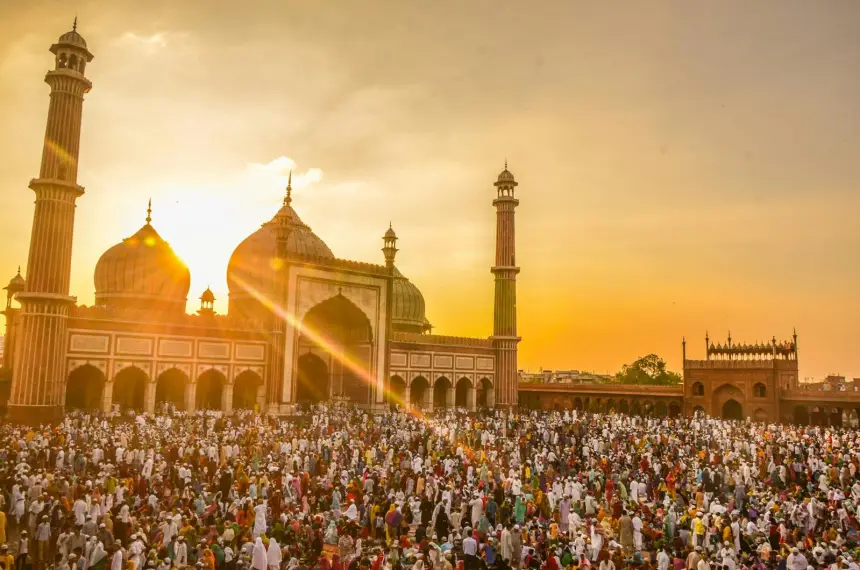
India Prepares to Launch Massive Population Count After Six-Year Delay
About the Author
Sarah Williams
Award-winning investigative reporter