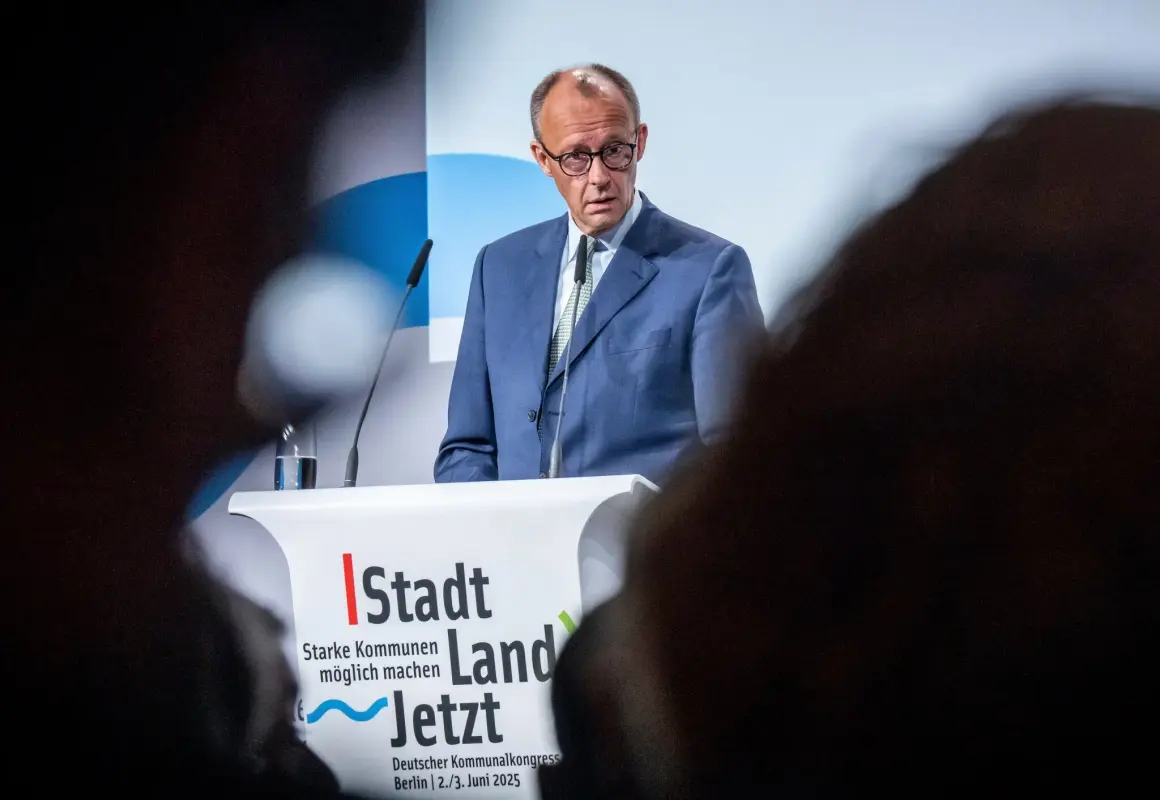
Chancellor Friedrich Merz's jet touched down in Washington early Thursday morning, marking the beginning of what may prove to be the most consequential 17 hours of his nascent political leadership. The 69-year-old conservative leader, who assumed Germany's top office just four weeks ago, faces a diplomatic trial by fire in the Oval Office with President Donald Trump—a meeting that could fundamentally reshape the trajectory of transatlantic relations and determine whether Europe's largest economy can reclaim its role as America's indispensable partner.The stakes could hardly be higher for a leader whose diplomatic credentials remain largely untested on the global stage. Merz arrives in Washington carrying the weight of European expectations, the burden of domestic skepticism, and the urgent need to prevent what many fear could be an irreparable fracture in the Western alliance. His mission: to convince Trump that Germany remains worthy of American partnership while simultaneously defending European values and interests that increasingly diverge from those of the current administration.
A High-Stakes Diplomatic Debut
The timing of Merz's inaugural visit reflects both opportunity and necessity. Taking office in May following a coalition collapse that brought his center-right Christian Democratic Union back to power, Merz inherited a Germany grappling with economic stagnation, security challenges, and a crisis of confidence in its international standing. His rapid ascension to the chancellorship—requiring an unprecedented second parliamentary vote—underscored the political fragility that has characterized German leadership in recent years.Unlike his predecessor's cautious approach to international engagement, Merz has embarked on an ambitious diplomatic offensive, visiting Paris, Brussels, Warsaw, and Helsinki in his first month. Yet none of these trips carry the existential importance of his Washington encounter, where the future of NATO, European security, and global trade hangs in the balance.The German leader's preparation for this moment has been meticulous and revealing. His team has consulted with advisers to other world leaders who have made the pilgrimage to Trump's Washington, learning from the experiences of those who faced the president's unpredictable temperament. Recent Oval Office encounters have become cautionary tales, with Ukrainian President Volodymyr Zelensky and South African President Cyril Ramaphosa both enduring public dressing-downs that exposed the risks inherent in face-to-face diplomacy with Trump.
The German Paradox
Merz's challenge is complicated by a fundamental paradox in German-American relations. While Germany remains Europe's economic powerhouse and NATO's second-largest contributor, Trump's administration views it with particular suspicion—seeing it more as a competitor than an ally. This skepticism extends beyond trade disputes to encompass deeper ideological disagreements about democracy, free speech, and the role of government in society.Vice President JD Vance's recent criticism of German restrictions on extreme political speech has highlighted these philosophical divides. The American administration's apparent sympathy for Germany's far-right Alternative for Germany party—which mainstream German politicians have sought to exclude from government—represents a direct challenge to post-war German democratic norms designed to prevent a return to the nation's darkest chapter.The domestic German response to these tensions reveals the complexity of public opinion. Recent polling shows that 73% of Germans now consider the United States an untrustworthy partner, while nearly half question Merz's diplomatic capabilities. This skepticism reflects not just concerns about Trump's leadership style, but broader doubts about whether the transatlantic relationship can survive fundamental disagreements about democratic values and international cooperation.
The Defense Spending Gambit
Merz's most significant bargaining chip in Washington is Germany's dramatic commitment to increase defense spending to 5% of GDP—a move that represents the most substantial military investment in German history since reunification. This pledge, which required overturning Germany's constitutional debt brake, demonstrates the new chancellor's willingness to make politically costly decisions to maintain American partnership.The defense spending commitment addresses Trump's longstanding complaints about European burden-sharing within NATO, potentially defusing one of the president's primary criticisms of German policy. However, German officials acknowledge that the commitment remains largely aspirational, with actual appropriations still requiring parliamentary approval and the details of what spending qualifies toward the target remaining deliberately vague.This strategic ambiguity reflects the delicate balance Merz must strike between satisfying American demands and maintaining domestic political support. German voters, still recovering from years of economic uncertainty, remain skeptical of massive military expenditures, particularly when social programs face potential cuts. The chancellor's ability to deliver on his defense promises while maintaining coalition unity will largely determine his political survival.
Ukraine and the European Security Framework
The war in Ukraine looms large over the Washington meeting, representing both a source of potential cooperation and a potential flashpoint for disagreement. Merz arrives as the first European leader to meet Trump since the latest round of Ukraine-Russia negotiations began, carrying European expectations that he can maintain American support for Ukrainian resistance while exploring pathways to a negotiated settlement.The German position on Ukraine reflects the complex calculations facing all European leaders: balancing moral commitments to Ukrainian sovereignty with practical concerns about the war's economic and social costs. Merz has positioned himself as a strong supporter of Ukrainian resistance while remaining open to diplomatic solutions—a stance that may align with Trump's expressed desire to end the conflict quickly.However, significant risks remain if Trump interprets European flexibility on Ukraine negotiations as weakness or abandonment of democratic principles. The president's transactional approach to international relations could lead him to view any German concessions as opportunities to extract additional concessions on trade, defense spending, or other bilateral issues.
Trade Wars and Economic Leverage
Perhaps the most immediate threat facing German-American relations is Trump's promised imposition of high tariffs on European imports, potentially beginning as early as July. For Germany, whose export-dependent economy relies heavily on access to American markets, such tariffs could trigger a devastating trade war with cascading effects throughout Europe.Merz's strategy appears focused on convincing Trump that trade conflicts between America and Europe ultimately benefit China—an argument that may resonate with an administration obsessed with great power competition. German officials believe they can present economic cooperation as a tool for containing Chinese influence while maintaining European competitiveness in key sectors.The challenge lies in Trump's apparent belief that trade relationships should be zero-sum competitions rather than mutually beneficial partnerships. Changing this fundamental perspective may require offering concrete concessions on market access, regulatory alignment, or other economic issues that could prove politically costly in Germany.
The Broader European Stakes
Merz's Washington visit occurs against the backdrop of broader European efforts to maintain unity in the face of American unpredictability. His success or failure in building rapport with Trump could influence how other European leaders approach their own relationships with the United States, potentially determining whether Europe can present a unified front or fragments into competing national strategies.The German chancellor's conservative credentials may provide advantages in dealing with Trump's administration, particularly compared to more liberal European leaders who have struggled to find common ground with American conservatives. Merz's business background and pragmatic approach to politics could facilitate the kind of transactional relationships that Trump appears to prefer.
Looking Beyond the Oval Office
Whatever the immediate outcomes of Thursday's meeting, the encounter will likely set expectations for German-American relations throughout Trump's presidency and beyond. Merz's performance will be scrutinized not only for its diplomatic substance but for its symbolic significance in demonstrating Germany's continued relevance on the global stage.The ultimate test will be whether Merz can emerge from the Oval Office having preserved German dignity while securing American cooperation on key European priorities. His ability to navigate Trump's unpredictable temperament while advancing concrete German interests could determine not only his own political future but the trajectory of the Western alliance in an increasingly uncertain world.For a chancellor whose domestic mandate remains fragile and whose international experience is limited, the next few hours in Washington represent nothing less than a defining moment—one that will echo through European capitals and shape transatlantic relations for years to come.